

Shame and Redemption
A Coldplay concert and a lesson for us all

I don’t want to write about the Coldplay concert. Everyone involved is, no doubt, now entering a very difficult time relationally, emotionally, and professionally.
So, I’m going to write about something else.
When I was somewhere between the ages of eight and eleven, my sister, some friends, and I rode our bikes to the Wegmans in Henrietta, New York. This was a big deal because we had to cross a highway to get there. (Ok, we didn’t actually have to Frogger our way across the highway), but there was a major road we had to cross, and I do think there was a footbridge or something that went over the highway that we had to cross. Who knows, I was between the ages of eight and eleven—it was a long time ago. My point is, we were very rarely permitted to make that trek without an adult and I think the only reason we were allowed to on that particular day was because there were some older kids from church with us.
In any event, we felt like kings and queens walking through that grocery store without our parents. When we got to the bakery, someone—to this day, I don’t remember who it was—told me that kids are allowed to take one free cookie. I thought this sounded like utter madness. Why on earth would the grocery store give away free cookies? I was no economist, but even at the age of somewhere between eight and eleven, I knew that business model was not sustainable.
My friend said it’s so that moms can keep their kids quiet while they’re shopping. And, since it’s become a general rule, we, too, could take a free cookie from the case even though we weren’t with our moms. So several of the kids in our little group took their free cookie.
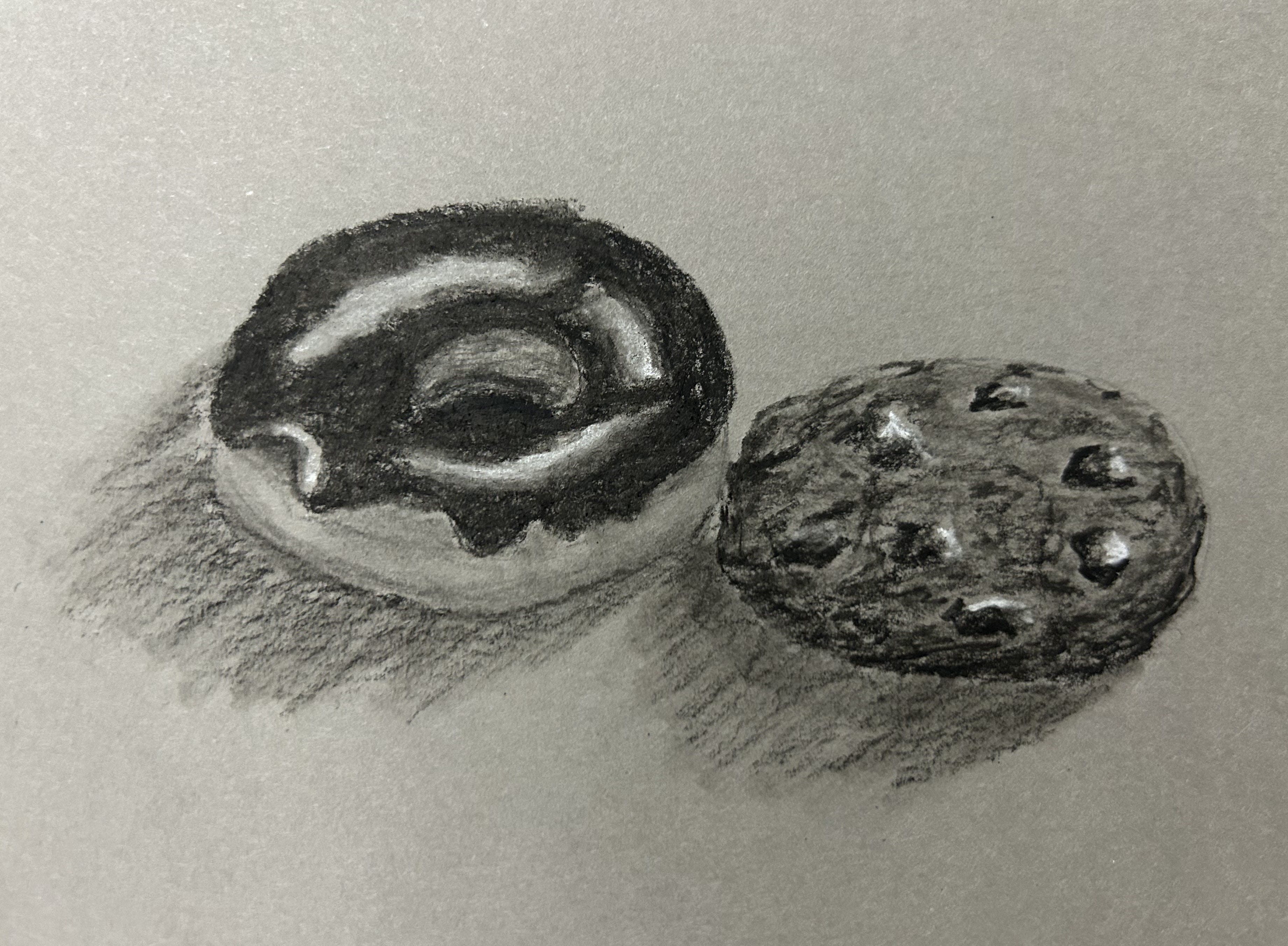
Now, I was a little more enterprising conniving than my peers. You see, in the same bakery case as the cookies were donuts and I much preferred a donut. Why, you ask? Well, I don’t know for sure, but it is almost certainly because everyone else took cookies, so if I took a donut, I would be the only one with a donut, and by the iron laws of scarcity, that would make my donut better than their cookies.
I genuinely wasn’t sure if I was allowed to take the donut. So, I stayed there to ponder a moment even as my cookie-wielding friends moved on. But I convinced myself that if kids are allowed to have a cookie, and if the donuts are in the same case as the cookies, then by the transitive property of bakery cases, kids were also allowed to have a donut. I took my donut and booked it out of there.
Once we were outside, my friends asked where I got the donut. I explained (probably in a pretty condescending tone) that kids are allowed one free donut. It was my sister, this time, who pointed out my error. “No,” she said. “Kids are allowed one free cookie.”
“But the donuts are in the same case as the cookies!” I said, with an overconfidence that surely gave away my insecurity (especially to an older sibling—they always have a sixth sense for younger sibling insecurities).
“That doesn’t mean they’re worth the same amount of money,” she said.
And that was it. She had me. Just because they’re in the same case doesn’t mean they’re the same value. I had stolen the donut from Wegmans.
That was my first moral failure. Now, here is my second.
I hadn’t eaten the donut yet. I hadn’t even touched it. I held onto it with that little scrap of butcher paper they leave close to the baked goods. I knew I ought to take the donut back in (and possibly exchange it for a cookie, because, I mean, come on, kids get a free cookie).
But I could not bring myself to take that donut back into the store. And do you know why?
Because shame. That’s why.
I knew—I knew in that moment, I knew when I was debating my sister, and I knew when I reached that little scrap of butcher paper into the donut case—I knew that I wasn’t supposed to take a donut. And now, the shame I felt at that moral failure prevented me from going back into the store to make it right. I waited until my friends turned to get their bikes and go home and then I shame-scarfed that shame-flavored donut while no one was watching. Then I got on my bike and we all went home.
My point is this: shame is a terrible feeling. And sometimes, it’s an appropriately terrible feeling. But shame without the possibility of redemption—that sounds like hell to me. I shouldn’t have taken the donut. And even after I did take it, I should have brought it back, and I didn’t. But my guess is, if you were to ask my sister if she has forgiven me for my moral failure(s) that day, she’d probably say “what on earth are you talking about? I don’t remember any of that.” But if she did remember, she would say that she’s forgiven me. Because shame only serves a moral purpose if it causes us to change our behavior and if there is redemption waiting for us on the other side.
I don’t want to talk about the Coldplay concert, but I hope everyone involved is able, eventually, to find redemption because shame without redemption sounds like hell.
Love this! No one does shame better than Shakespeare in Sonnet 129
I forgive you too, Joe.